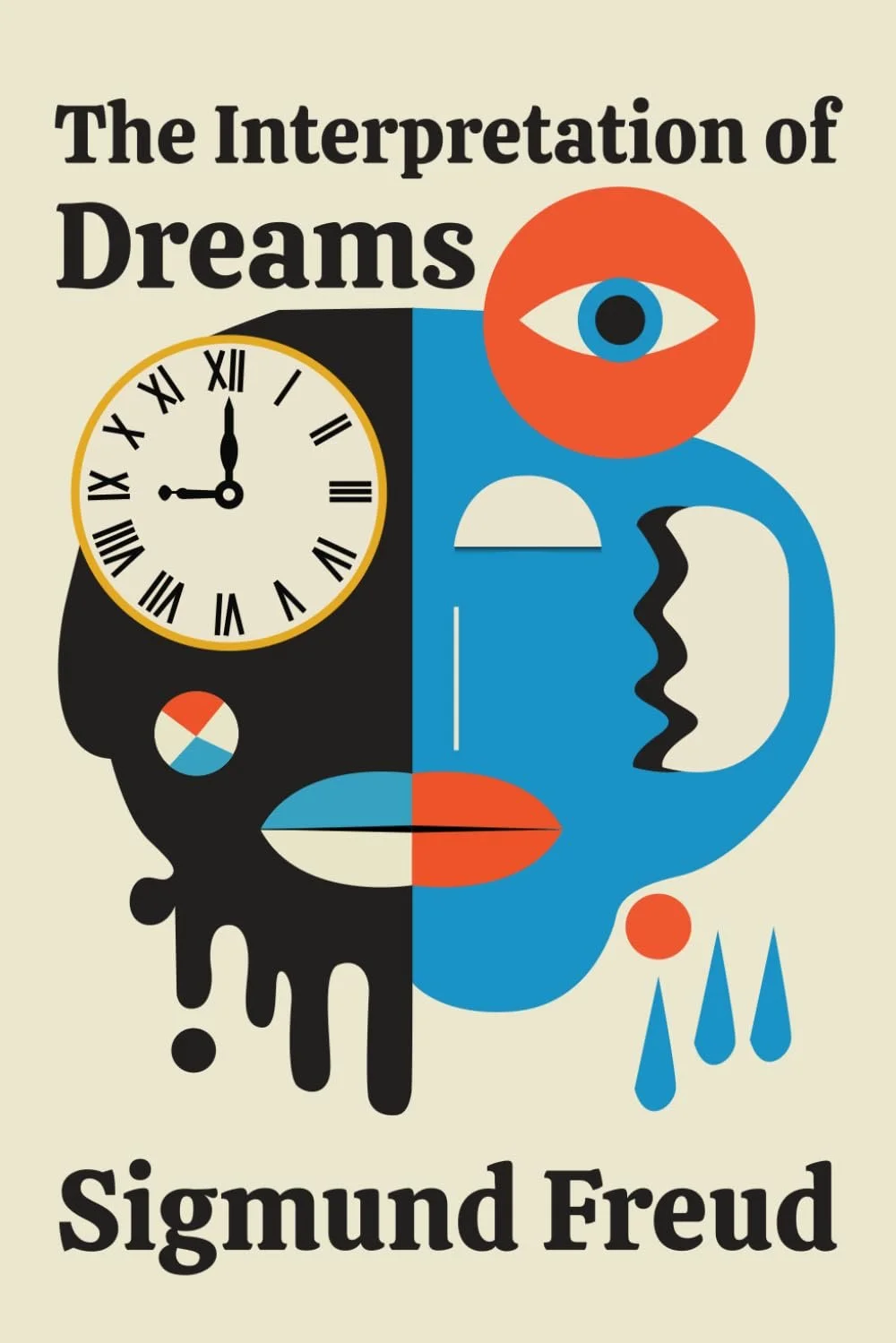
Written by Sigmund Freud, this foundational work introduces the idea that dreams are meaningful expressions of the unconscious mind rather than random mental noise. Freud explores how desires, fears, memories, and unresolved conflicts are symbolically encoded in dream imagery, proposing that dreams provide a pathway to hidden layers of the psyche. While rooted in early psychoanalytic theory, the book remains influential for its emphasis on symbolic meaning and inner life.
Plant medicine states often operate through the same symbolic language as dreams, revealing unconscious material in images, narratives, and archetypal forms. The Interpretation of Dreams helps develop symbolic literacy—supporting integration by teaching how to listen to the psyche’s non-linear modes of communication rather than taking visionary content at face value.
Written by Sigmund Freud, this foundational work introduces the idea that dreams are meaningful expressions of the unconscious mind rather than random mental noise. Freud explores how desires, fears, memories, and unresolved conflicts are symbolically encoded in dream imagery, proposing that dreams provide a pathway to hidden layers of the psyche. While rooted in early psychoanalytic theory, the book remains influential for its emphasis on symbolic meaning and inner life.
Plant medicine states often operate through the same symbolic language as dreams, revealing unconscious material in images, narratives, and archetypal forms. The Interpretation of Dreams helps develop symbolic literacy—supporting integration by teaching how to listen to the psyche’s non-linear modes of communication rather than taking visionary content at face value.