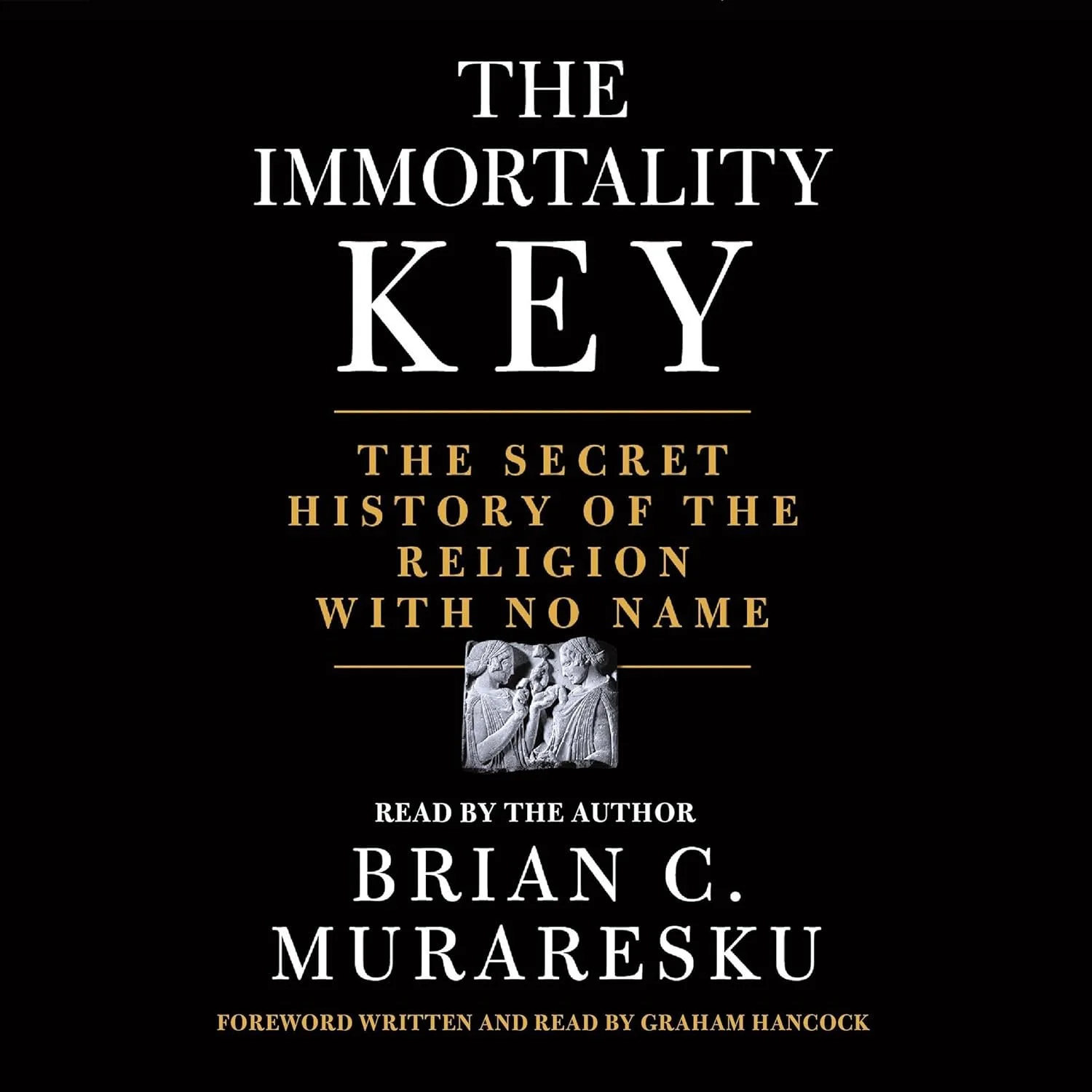
Classicist and legal scholar Brian C. Muraresku investigates the hidden history of psychedelic sacraments in ancient Western religions. Drawing on archaeology, chemistry, and historical texts, the book explores evidence that early Greek and Christian rituals may have involved psychoactive substances used to induce direct experiences of transcendence, rebirth, and communion. The narrative challenges modern assumptions about religion by suggesting that mystical experience—not belief—was once central to spiritual initiation.
For plant medicine communities, The Immortality Key offers historical and cultural grounding that legitimizes direct mystical experience as an ancient and communal practice. It helps contextualize modern ceremonial work within a long lineage of sacramental use, supporting integration through meaning, continuity, and a deeper sense of ancestral remembrance.
Classicist and legal scholar Brian C. Muraresku investigates the hidden history of psychedelic sacraments in ancient Western religions. Drawing on archaeology, chemistry, and historical texts, the book explores evidence that early Greek and Christian rituals may have involved psychoactive substances used to induce direct experiences of transcendence, rebirth, and communion. The narrative challenges modern assumptions about religion by suggesting that mystical experience—not belief—was once central to spiritual initiation.
For plant medicine communities, The Immortality Key offers historical and cultural grounding that legitimizes direct mystical experience as an ancient and communal practice. It helps contextualize modern ceremonial work within a long lineage of sacramental use, supporting integration through meaning, continuity, and a deeper sense of ancestral remembrance.